STORIES OF 47

Theme: resistance and witness — full compilation

Who refuses, documents, or intervenes — whistleblowers, journalists, judges, neighbors, the planned testimony.

View as list →


Fifty-Plus Cases That Fell Apart

Oct 18, 2025 · BlueSky, Nicole Foy

A ProPublica investigation methodically tracked over fifty cases of US citizens detained by immigration agents on charges that were either dismissed in court or never filed at all — including a woman accused of an assault that wasn't on video and a charge listing the injury as 'the thumb of an ATF Special Agent.'

A ProPublica investigation by reporter Nicole Foy tracked, by sourcing from social media, court records, and local press in Spanish and English, more than fifty cases of US citizens detained by federal immigration agents on charges that subsequently collapsed in court or were never filed at all. The pattern crossed demographics: senior citizens tackled, pregnant women handcuffed, children detained, a veteran pulled from his car on the way to work.
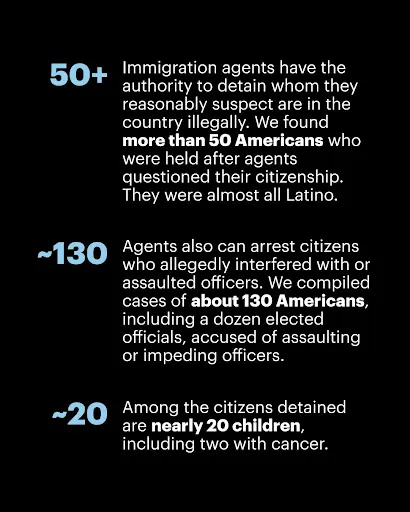
Stat graphic: white text on a black background reading "50+ — Immigration agents have the authority to detain whom they reasonably suspect are in the country" — followed by additional text not fully visible in the preview.

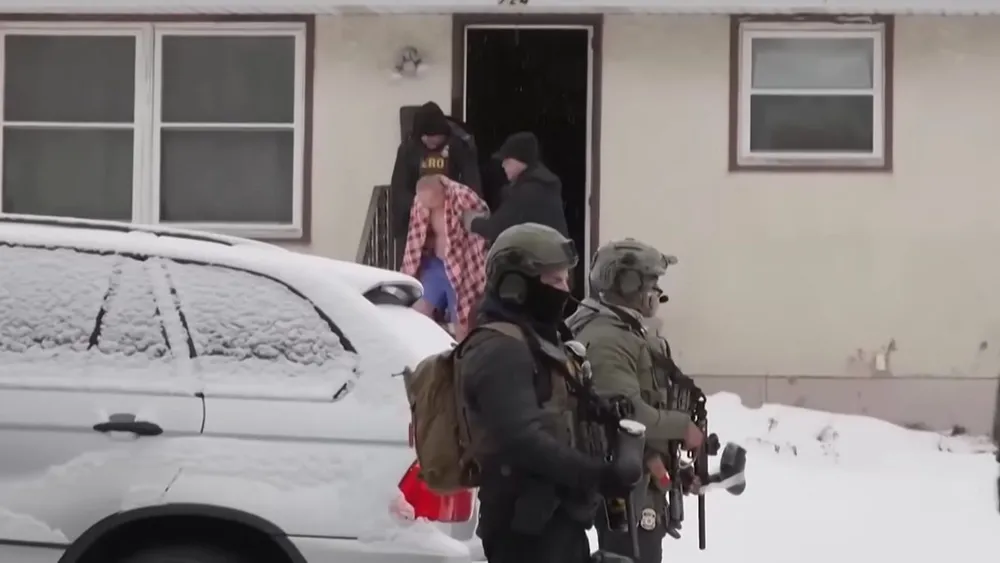
The mechanism for entry into custody was often not a citizenship-status question at all but an alleged assault on or interference with an officer. The catalogue includes the case of Andrea Velez, an LA woman accused of an assault that did not appear on the available video, whose case was dismissed by a federal judge. Other charges in the sample included causing an injury to “the thumb of an ATF Special Agent,” using a trash can to block CBP cars, and “resisting arrest” of unspecified scope.

The investigation’s methodology was, by the reporter’s own description, ad hoc — TikTok, Instagram, a personal spreadsheet — necessitated by the absence of any official agency tracking of US-citizen-in-custody incidents. The number 50+ is, on the same logic, a floor rather than a count.
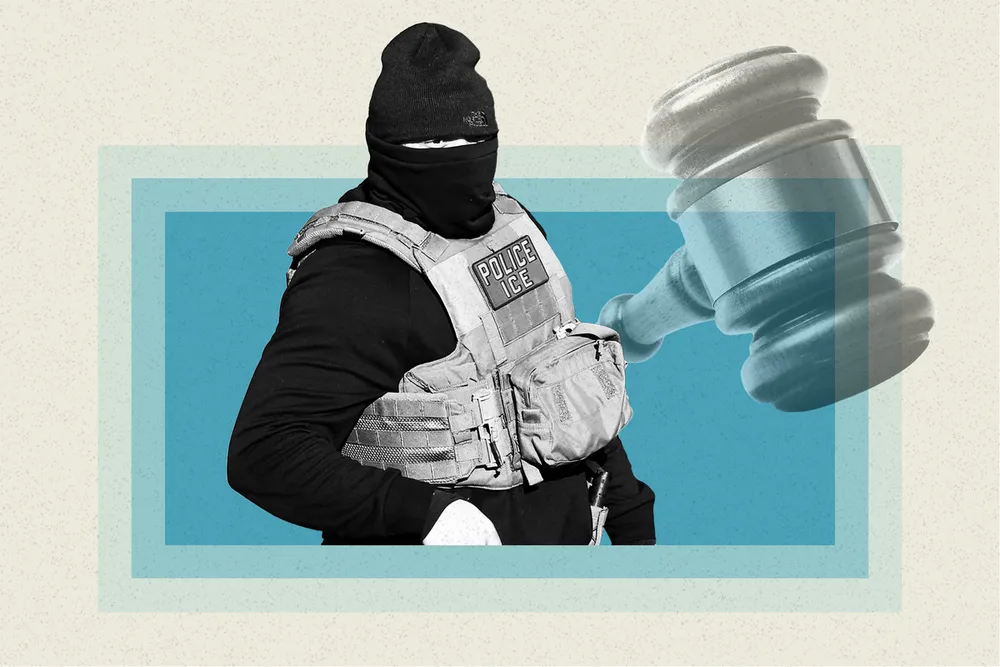
Operation in the Most Conservative Neighborhood

Oct 31, 2025 · BlueSky, Peter Nickeas

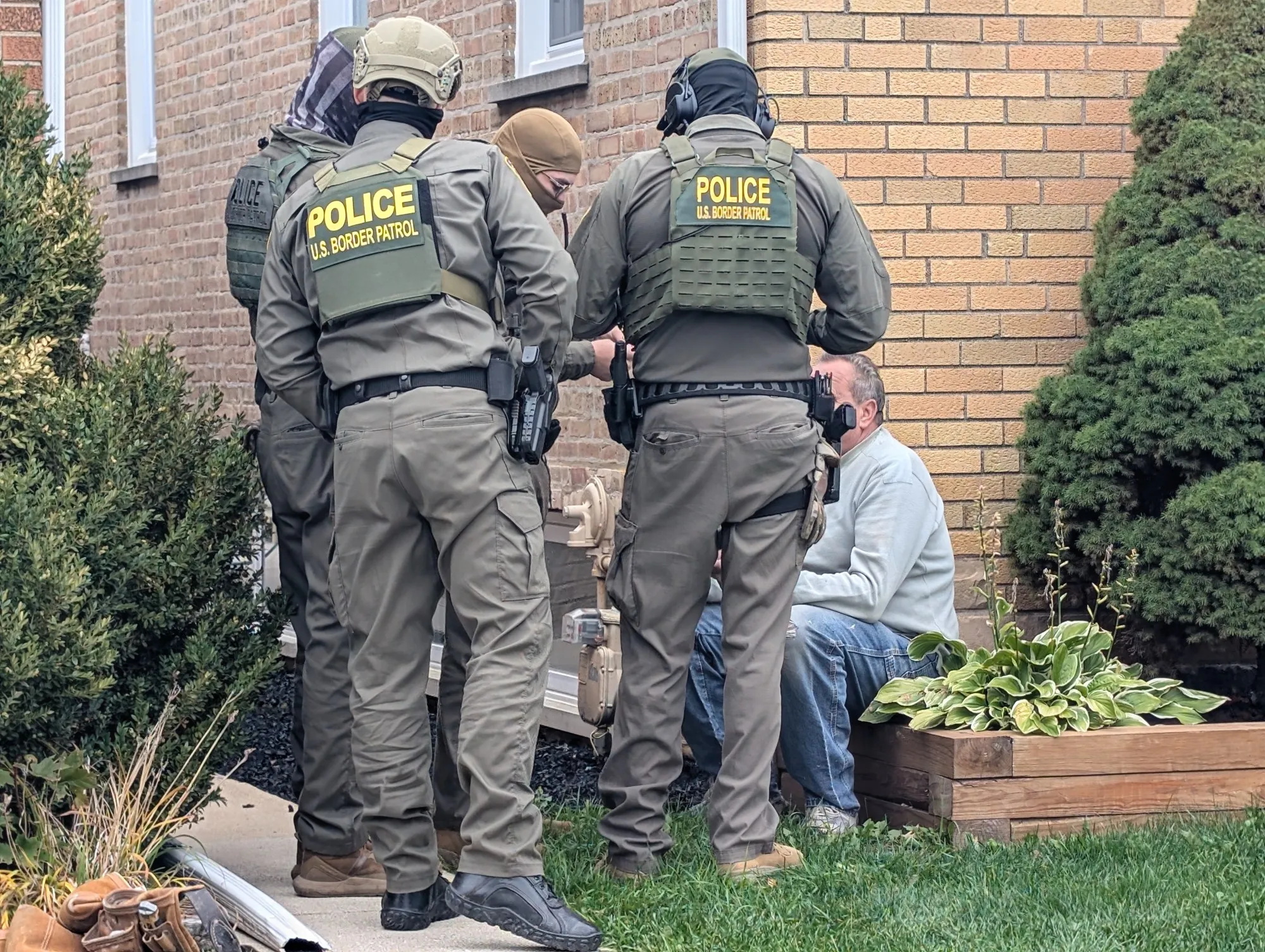
A Border Patrol operation seized people working in the front yard of a home in Edison Park, Chicago, transferred them in a parking lot in a neighboring suburb to a prisoner van, and was met by neighbors blowing whistles and shouting at the agents.

On an October 2025 afternoon, Border Patrol agents removed people working in the front yard of a home on Oconto Avenue in Edison Park — the most conservative neighborhood in Chicago, by the local accounting — and drove them in convoy to a parking lot behind an office building in Niles, where they were transferred to a prisoner van. A CBP helicopter circled the convoy. The chief was on scene but stayed back. The neighborhood gathered as the operation continued.

Photograph from the Edison Park scene: federal agents in tactical gear stand near a residential street, with neighbors visible in the background.

“You’re in the most conservative neighborhood in the city and nobody wants you here,” a neighbor told the agents. Whistles followed the convoy as it moved. Filming continued from sidewalks and porches. CBP, in turn, made a show of pointing cameras at protesters and at press IDs.

The processing happened in a parking lot west of Caldwell, south of Jarvis. An agent in a tattered American-flag gaiter told a photographer they were done for the day. A straw hat and a neon vest sat on the dashboard of the prisoner van, headed toward the Broadview detention staging area.


She Has Not Gone Outside

Feb 3, 2026 · KARE 11

Thi Dua Vang, a Hmong asylum-seeker in St. Paul who fled religious persecution in Vietnam and has legal status in the U.S., was detained by ICE in January, transferred to Texas, and ordered released by a judge after two weeks; since her return, she has been unable to leave her home because ICE agents continue to come to the door.

Thi Dua Vang fled Vietnam, where her family had been persecuted for being Christian, with a brother who had been imprisoned for his faith. She lived undocumented in Thailand for more than seven years before the family was granted asylum in the United States in December 2023. She had applied for a green card and was awaiting final approval. On the morning of January 8, six ICE agents came to her family’s St. Paul home; her son opened the door. Vang speaks Hmong; her brother, who interpreted for her, says the agents would not state a reason. She was transferred the next day to El Paso, then to Houston. At one point she was brought onto a runway in a plane she believed was deporting her to Vietnam before being pulled off. After two weeks, an immigration judge ordered her released on bond.

Five days after her release, in compliance with the conditions of her bond, Vang completed a check-in with ICE; she was free to go. Since then, she has not been able to leave her home. She has lost her job. According to her account in the article, ICE agents have continued to come to the house. The release order, the bond, and the legal-status documents — the formal pieces of paper an immigration system is supposed to use to certify that a person is not to be detained again — have not, in her case, foreclosed the possibility of being detained again.


Five Patterns of Defiance

Feb 10, 2026 · Politico

Federal judges hearing immigration cases have begun to articulate a recurring playbook of administrative noncompliance with their orders — across detainee transfers, deadlines, release conditions, post-release treatment, and bond hearings.

Federal judges adjudicating immigration cases under the second Trump administration have begun publicly cataloguing a pattern of noncompliance with their orders. The list, as enumerated by judges in Minnesota and elsewhere, runs to at least five recurring tactics: detainees rapidly relocated across state lines (often to Texas or New Mexico) before habeas challenges can ripen; court deadlines for response simply ignored, with growing frequency; bail-style “conditions” like GPS monitoring imposed on people the judge has already ordered released; release into the cold or far from home, without identification, wallets, or warm clothes; and bond hearings that fall measurably short of constitutional standards.

Article preview: "How the Trump administration skirts — and defies — court rulings on ICE detentions" — Politico.

The smallest details index the larger pattern. In one case, a federal judge spent court time tracking a UPS shipment to ensure that an ordered-released man recovered his identification documents. The act of judging began to include the act of physically supervising whether the executive branch’s compliance had occurred.

The judges quoted are increasingly drafting orders prescriptive enough to leave no room for interpretation. Whether prescriptive orders prove harder to evade than non-prescriptive ones is, on the record so far, uncertain.


The Thirty-Eighth Killing

Feb 10, 2026 · BlueSky, Charlie Archambault

A running tally maintained by independent observers records the United States military's thirty-eighth instance of unlawfully killing civilians under the orders of the Secretary of Defense and the President; the cumulative count of dead is at least one hundred thirty.

A running tally compiled from public reporting on US military operations in the Caribbean and elsewhere has recorded its thirty-eighth instance of the United States military unlawfully killing civilians under the orders of the Secretary of Defense and the President. The cumulative count of the dead is at least one hundred thirty. None of those killed were charged with a crime; the identities of most were not known to those who killed them.

The connecting thread visible from outside is the absence of an articulable legal framework. Strikes are described, in announcements when they are announced at all, as targeting “narcoterrorists” or other categorical enemies whose definitions are not given before the fact and whose qualification cannot be examined after. The constraint has shifted from law to assertion.


After the Letters Were Published

Feb 17, 2026 · BlueSky, Nathan Kalman-Lamb

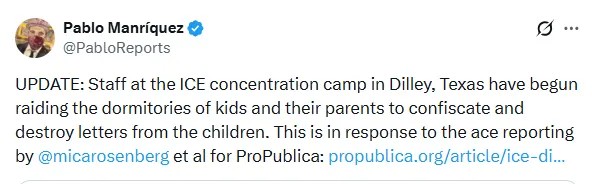
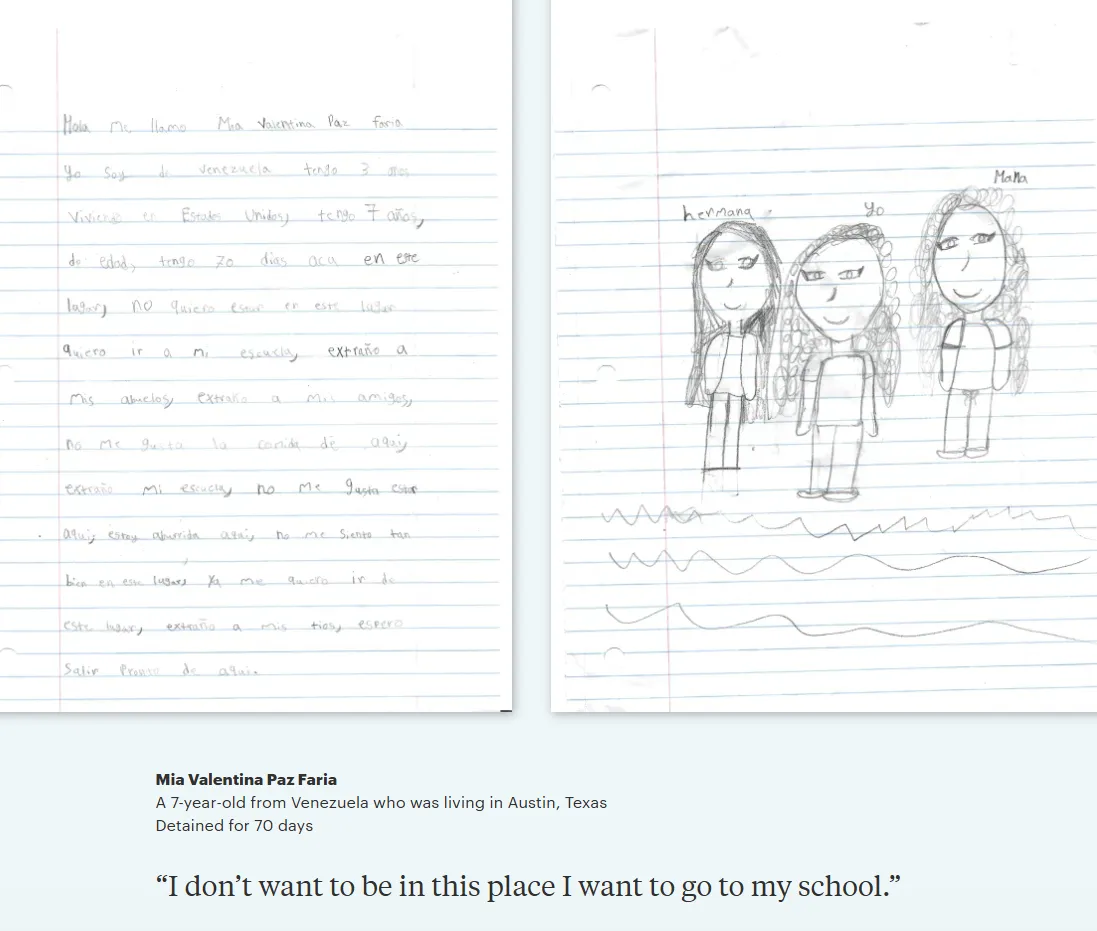
Letters from children imprisoned in the Dilley, Texas family detention camp — including a seven-year-old held for seventy days, a five-year-old, and a nine-year-old held for one hundred thirteen days — reached ProPublica. The day the resulting story was published, federal personnel raided the dormitories to confiscate further letters.

A seven-year-old child from Venezuela, Mia Valentina Paz Faria, was held in the Dilley, Texas family detention camp for seventy days. In a letter to the outside, she wrote: “I don’t want to be in this place I want to go to my school.” Hers was one of several letters that reached ProPublica reporters and was published in the resulting story.

Photograph of Mia Valentina Paz Faria, a 7-year-old from Venezuela who was living in Austin, Texas, detained for 70 days. Caption quotes her: "I don't want to be in this place I want to go to my school."

The published letters carried the voices of multiple children at the same facility. A nine-year-old held one hundred thirteen days wrote, “Me in dilei [Dilley] am not happy please get me out of here to colombia.” A five-year-old wrote two words: “My family.” Mothers at the camp described children who had begun cutting themselves and talking about suicide, and who were finding worms and mold in their food.

The day the ProPublica story was published, federal personnel raided the camp’s dormitories to confiscate and destroy further letters from the children. The administrative response to the publication was not an investigation of the conditions described, nor an accommodation of the children’s stated wishes, but the elimination of the specific medium that had let those statements escape.

Update screenshot stating: "Staff at the ICE concentration camp in Dilley, Texas have begun raiding the dormitories of kids and their parents to confiscate and destroy letters from the children. This is in response to the reporting by Mica Rosenberg et al for ProPublica."


Trained to Disregard

Feb 23, 2026 · BlueSky, Molly Ploofkins

ICE whistleblower Ryan Schwank, a former agency instructor and staff attorney, testified that field agents were trained to disregard constitutional rights — making rights violations a matter of policy rather than aberration.

ICE whistleblower Ryan Schwank, a former agency instructor and staff attorney, testified that field agents were trained to disregard constitutional rights as a matter of operational policy. Schwank’s account moves the question of unlawful arrests, denied counsel access, and warrantless entries from the category of individual misconduct into the category of institutional design.

The institutional framing matters because the remedies are different. Individual misconduct can be addressed by discipline; institutional design requires changing the training, the policies, and the people who set them.


The Only Other Witness

Feb 24, 2026 · The New York Times, The New York Times

The only passenger in the car when an ICE officer shot and killed a US citizen in Texas had planned to publicly contradict the government's official account of the shooting; before he could testify, he died in an unrelated car crash.

The only passenger in the car when an ICE officer shot and killed a United States citizen in Texas in 2025 was Joshua Orta. Orta had planned to speak publicly and contradict the government’s official account of the shooting. He died in an unrelated car crash before he could do so.

The word “unrelated” is doing all the work in the sentence above, and the only thing the public has to support it is the absence of contradicting evidence. In a case where the contested fact is the killing of a United States citizen by a federal officer, the absence of contradicting evidence is no longer a neutral state.


Adding to the War Crimes File

Mar 2, 2026 · BlueSky, David Kaye

Reading the Secretary of Defense's public statement that the mission would not be 'guided by rules rooted in the law of armed conflict,' former UN special rapporteur David Kaye flagged the declaration as material for any future war crimes prosecution.

The Secretary of Defense’s public statement that the mission would not be “guided by rules rooted in the law of armed conflict” amounted, on its face, to a public declaration that jus in bello principles were inapplicable to the operation. International law professor David Kaye, a former UN Special Rapporteur, flagged the statement as a near-textbook entry for any eventual war crimes prosecution file.

The reason such statements have evidentiary weight is not that they prove a specific war crime; it is that they document the leadership’s stated intent to operate outside the legal framework that defines those crimes. Prosecutors looking for proof of mens rea years from now will find such public declarations harder to misinterpret than internal cables.


The First Bumbling Raid

Mar 28, 2026 · The Watch (Radley Balko), Radley Balko

Investigative journalist Radley Balko launched an ongoing series cataloguing the false official statements that the Department of Homeland Security has issued after specific acts of abuse or violence by ICE and Border Patrol officers in the field; the first installment examines the illegal raid on ChongLy Scott Thao and his family.

Investigative journalist Radley Balko launched an ongoing series cataloguing the false official statements that the Department of Homeland Security has issued after specific acts of abuse or violence by Immigration and Customs Enforcement and Border Patrol officers in the field. The first installment examines the illegal raid on ChongLy Scott Thao and his family — a raid the agency described publicly in terms that contradicted its own paperwork.

Substack article preview titled "You Can't Hide Your Lying ICE."

The series itself is the substance: any single instance of an agency lying about a botched operation can be dismissed as anomaly; a methodical accumulation of cases, each documented from the public record, is a different kind of evidence. The cataloguing converts what looks like noise into pattern.